Why Santa Fe asphalt needs it
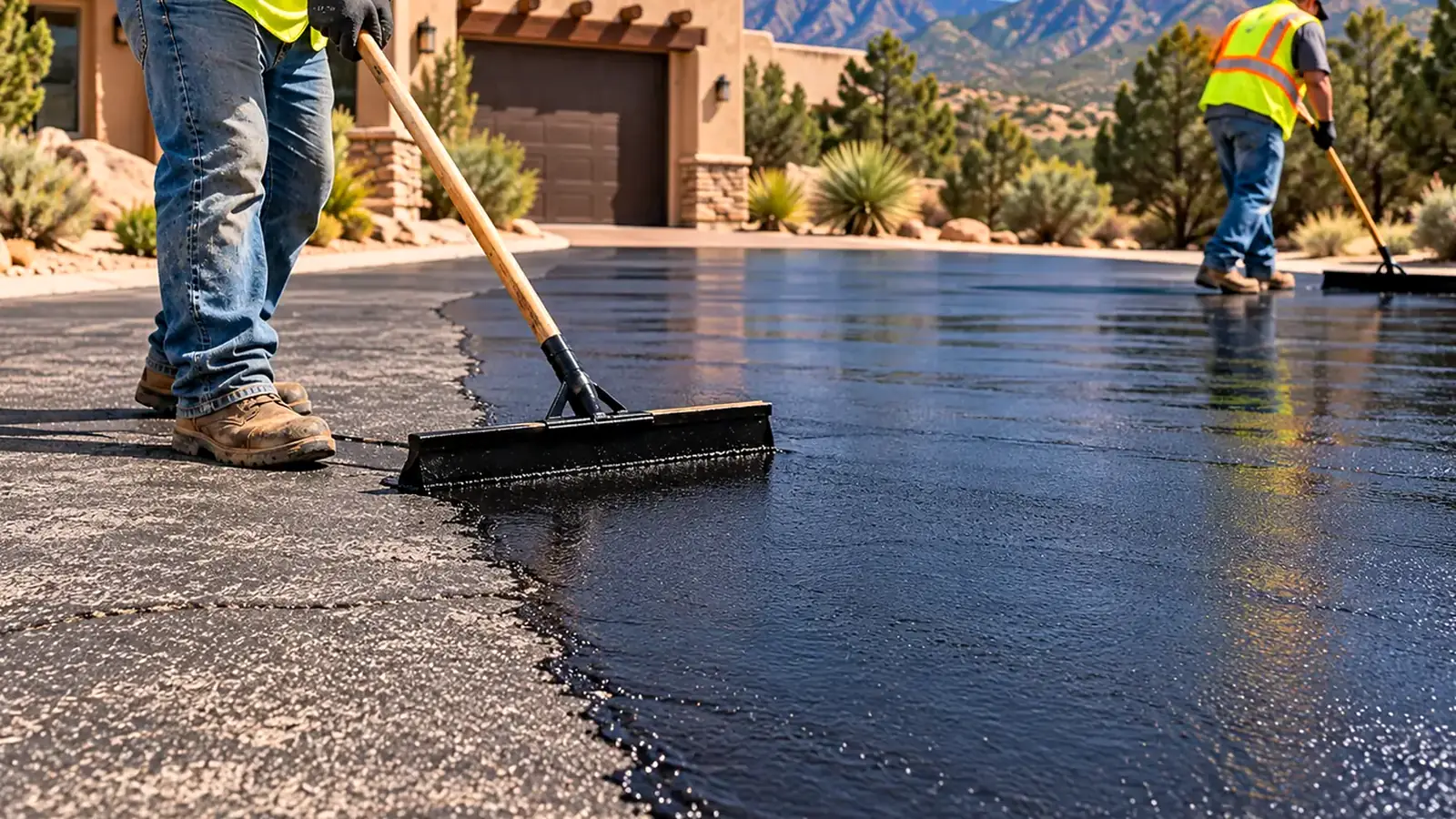
At 7,000 feet the sun is intense, and it oxidizes the binder holding asphalt together. That's the gray, rough look you see on older driveways. Winter adds freeze-thaw, and de-icing chemicals and plow scrapes add wear. Sealcoat puts a protective layer back on top that blocks UV, sheds water and resists oil and fuel.
Included every time
- Edges trimmed; surface swept and blown clean
- Oil spots cleaned and primed
- Hot-pour crack sealing
- Hand-cut borders at walls, walks and landscaping
- Two full coats of commercial sealer with sand for traction
- Barricades and written cure instructions
When
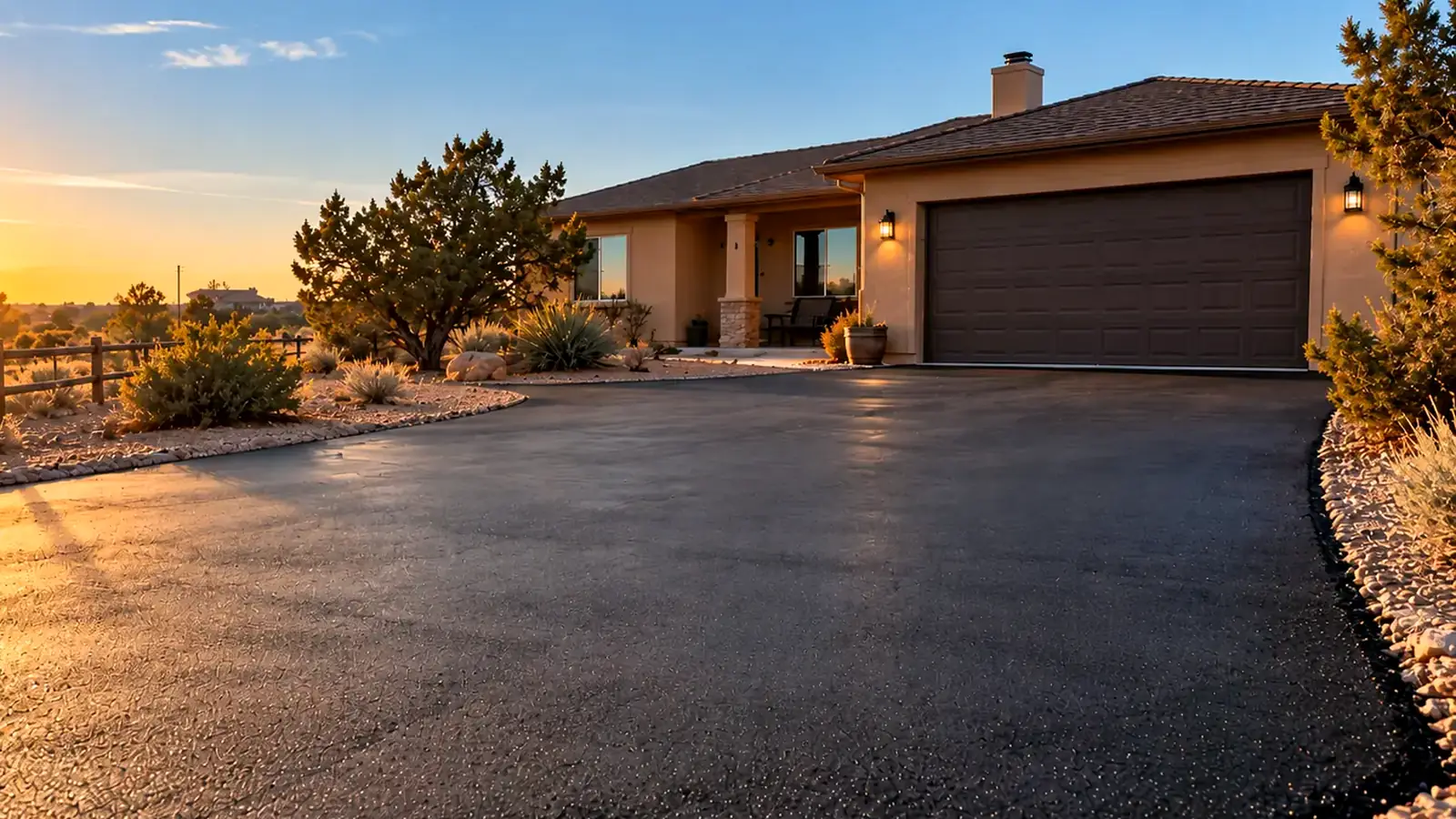
- New asphalt: wait 6–12 months.
- Then roughly every 2–3 years.
- Weather: about 50°F and rising, dry, calm, and no freeze or storm within a day. In Santa Fe that's usually late spring to early fall.
More on sealcoating in Santa Fe.
Questions we hear
When can I drive on it?
Usually after 24–48 hours depending on temperature.
Do you fill cracks first?
Always — sealcoat doesn't seal cracks on its own.
Does de-icer hurt sealcoat?
Some chemical de-icers are hard on asphalt and sealer. Sand or a product labeled safe for asphalt is gentler.