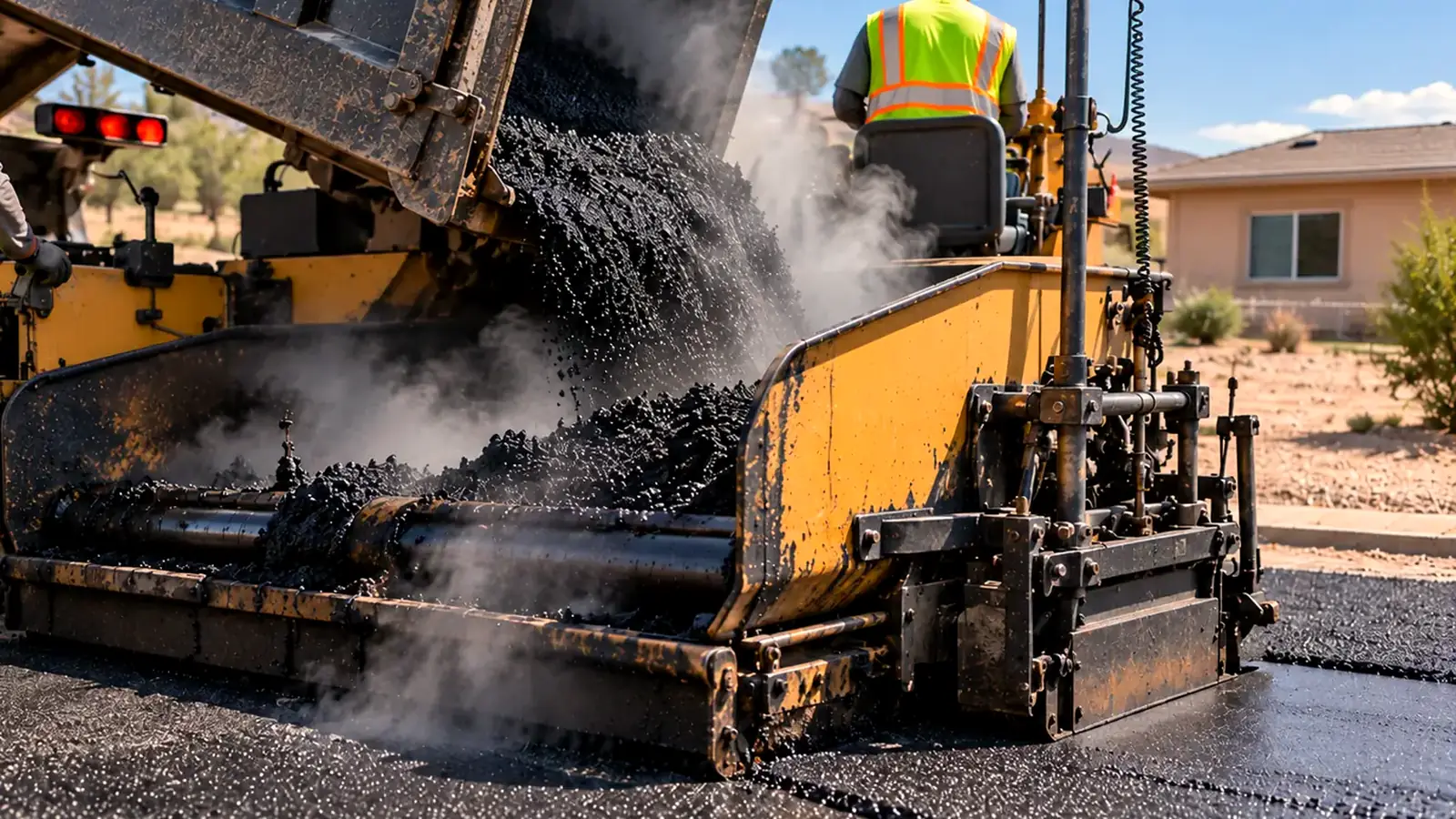
When an overlay is the right call
An overlay is a new layer of hot-mix over existing asphalt. It works when the damage is mostly on the surface. If the base has failed, the old cracks come back through the new layer — sometimes within a winter.
| Good candidate | Needs repair first |
|---|---|
| Gray, rough or raveling surface | Alligator cracking across large areas |
| Scattered narrow cracks | Heaved or sunken sections |
| Small potholes | Edges broken off by plows or runoff |
| Water drains off normally | Ice forms in the same low spots every year |
How we do it
- Repair failed areas full-depth.
- Rebuild broken edges with compacted shoulders.
- Seal larger cracks.
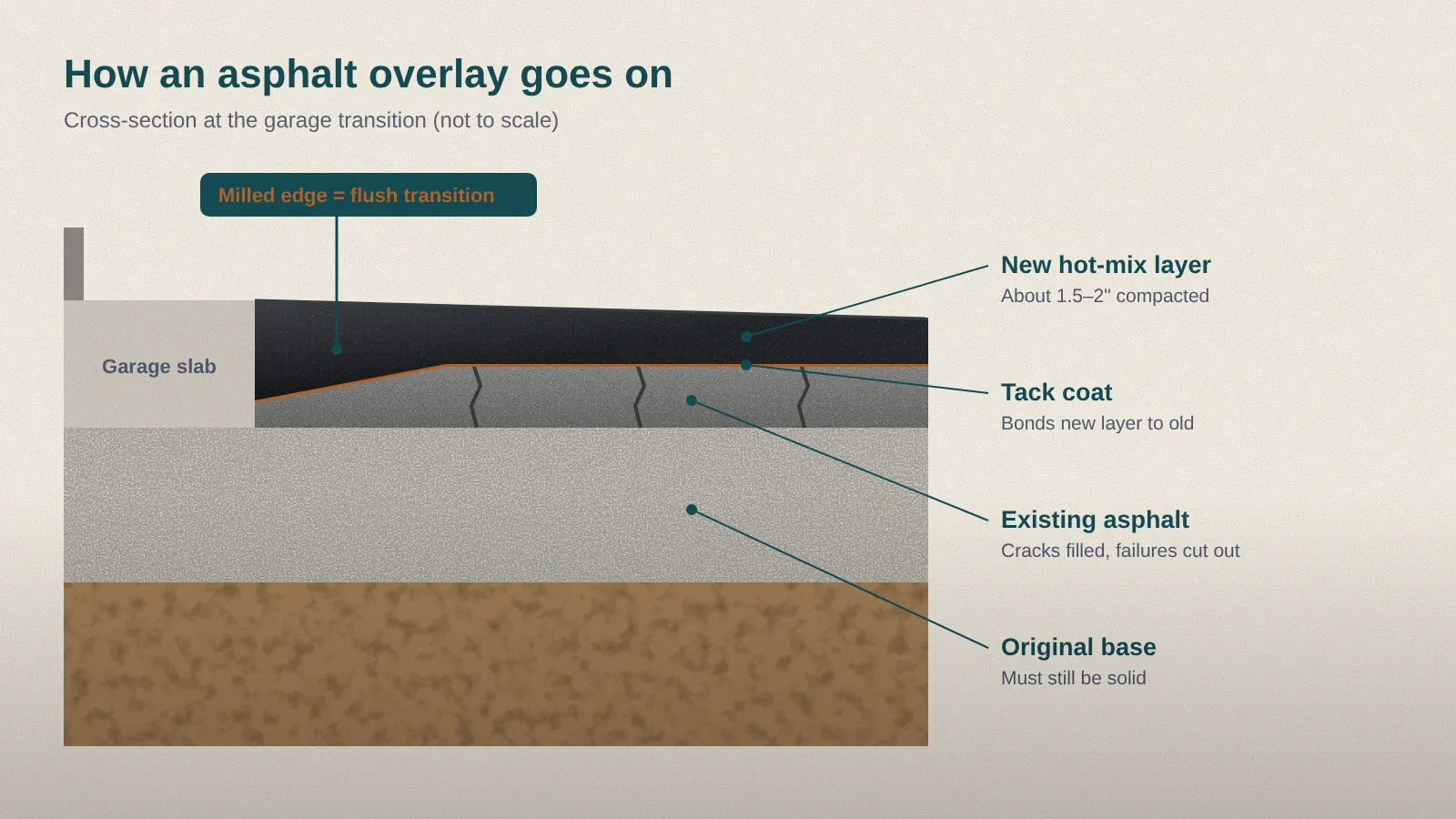
- Mill the transitions at the garage, walks and street so the new layer is flush.
- Tack and pave about 1.5–2 inches compacted for driveways.
Why owners choose it
- Less cost and less disruption than tearing out
- Usually done in a day
- Can correct minor low spots that hold ice
Questions we hear
How long does an overlay last here?
On a sound base, often 10–15 years or more with sealcoating.
Will it raise the driveway at my garage?
Not when the edges are milled first.
Can you overlay in the fall?
Early fall, on warm days, yes. Hot-mix needs warmth to compact properly.