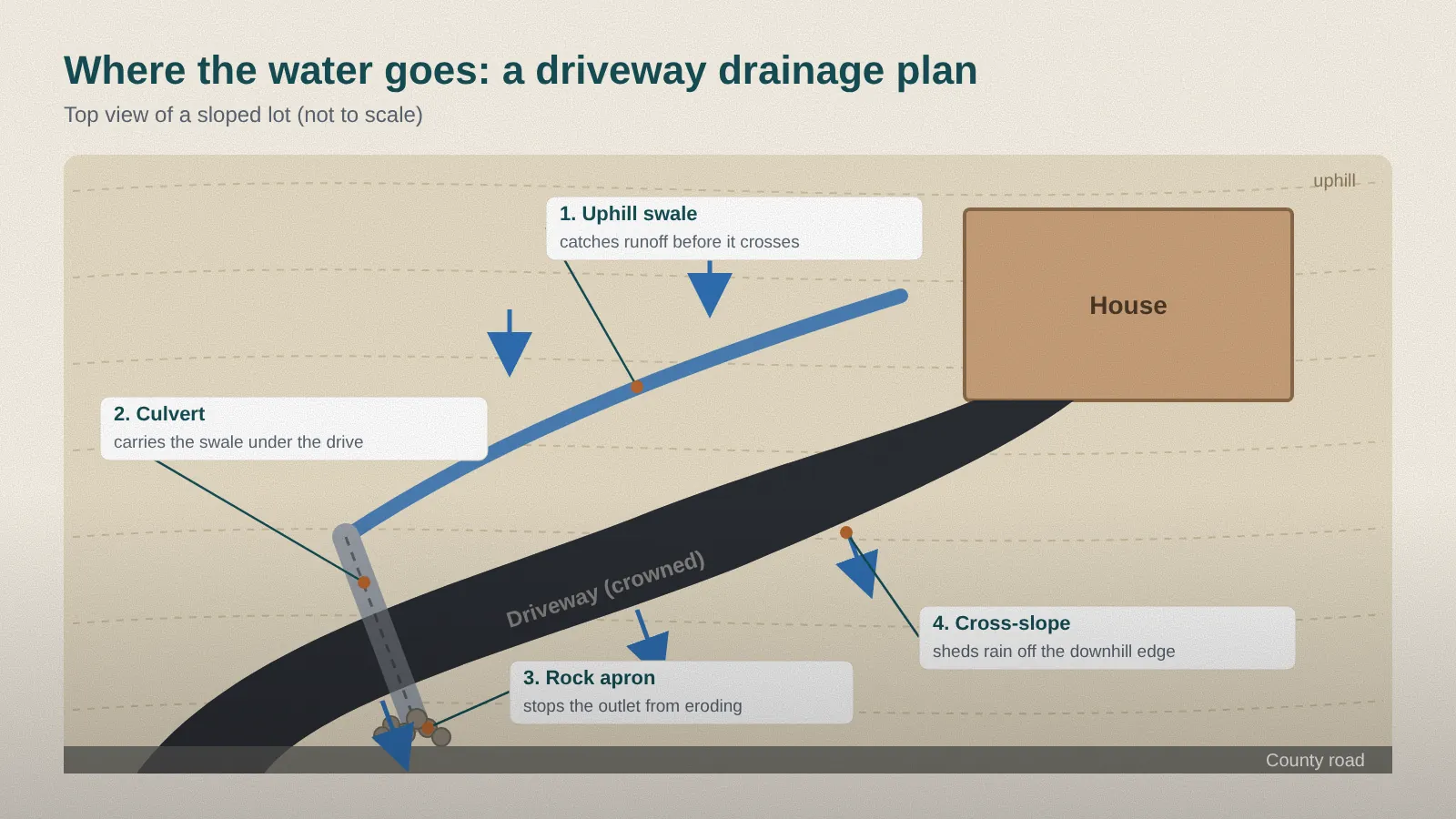
Two water seasons
Santa Fe driveways deal with water twice a year. In late winter and spring, snowmelt runs across the surface during the day and freezes at night, prying open every crack. In summer, monsoon storms dump heavy rain in a short time and send it downhill fast. A driveway that handles both lasts; one that doesn't starts breaking up within a few years.
Our drainage toolkit
Uphill swales
Catch runoff before it crosses the drive and send it to a culvert or safe outlet.
Culverts
Sized for what drains to them, with protected inlets so they don't clog.
Cross-slope & crown
So rain and snowmelt run off the surface instead of along it.
Rock aprons & rundowns
Armored outlets that keep water from cutting new gullies.
Snow piles count too
Where you push snow matters. A pile against the uphill side of the drive melts back across it all spring. We plan snow storage on the downhill side or away from the pavement where possible.
Before you pave
If your gravel or crusher-fine drive is already rutting or washing out, the drainage problem will follow the new surface unless it's fixed. Drainage work is part of every driveway we build. Work in a mapped flood area or near a public road may need county review — we'll flag it.
Questions we hear
Do I need a culvert where my drive crosses the road ditch?
If there's a ditch, usually yes. The county may set the size for a new connection.
Why does my driveway ice up in the same spot every spring?
Usually snowmelt or runoff crossing there and refreezing at night. Redirecting it uphill fixes the ice and protects the pavement.
Can you fix drainage without repaving?
Often, yes — swales, culverts and regrading the shoulders can be done on their own.