Build it for winter
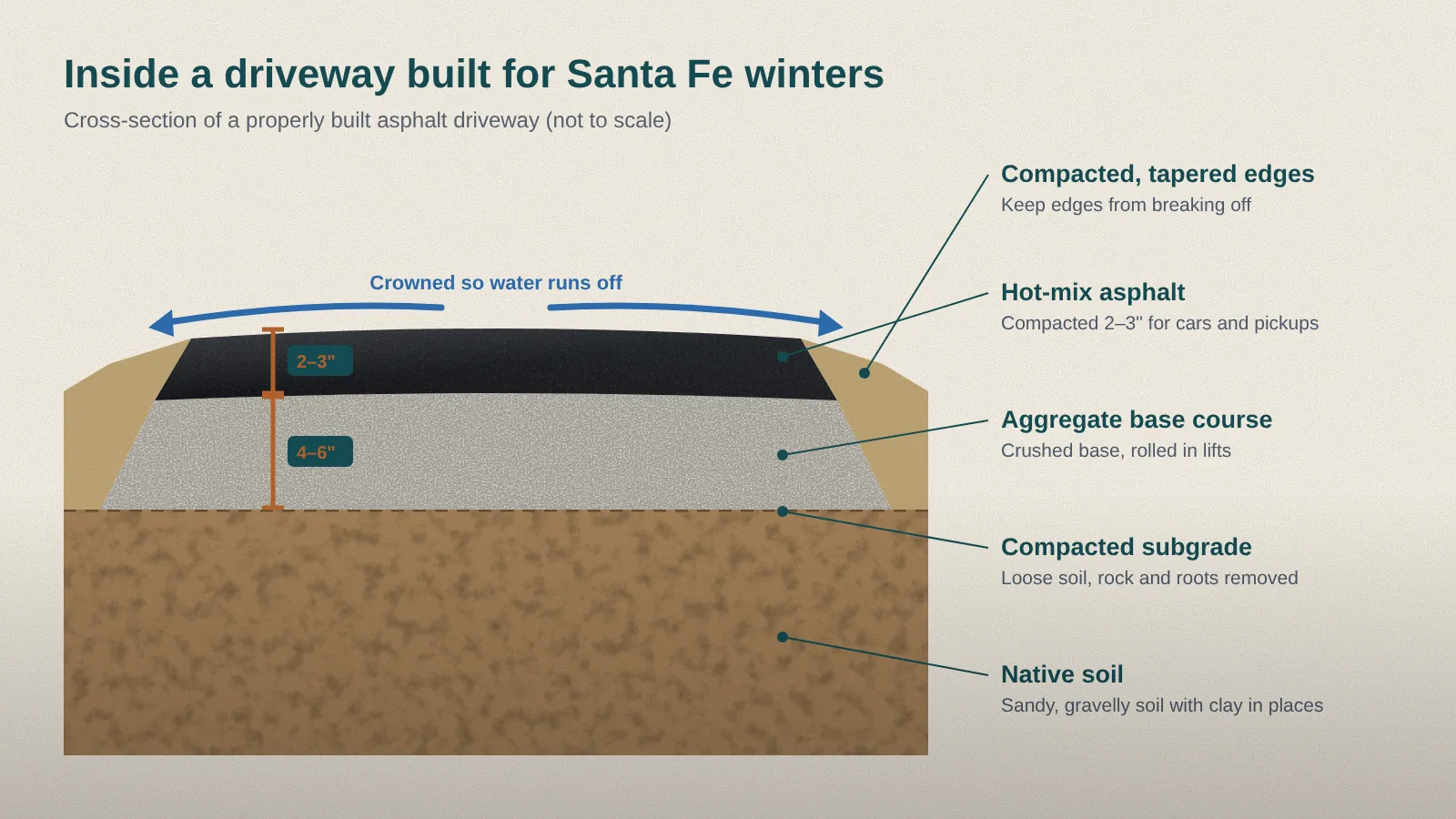
- Drainage first. Meltwater needs to leave the surface before it refreezes. See the drainage plan.
- Plan snow storage. Piles on the uphill side melt back across the drive all spring. Push snow downhill or off the pavement.
- Strong edges. Tapered, compacted edges with shoulder support so plows don't catch them.
- Enough base. A solid, well-drained base resists frost heave.
Plowing and shoveling
- Use plow shoes or set the blade slightly high, especially on chip seal.
- Avoid metal-edged shovels digging into fresh asphalt.
- Don't pile snow at the end of a culvert — it blocks meltwater.
De-icers and traction
Some chemical de-icers are harsh on asphalt and sealcoat, and on nearby plants. Sand gives traction without chemicals. If you use a de-icer, choose one labeled safe for asphalt and use it sparingly.
Recurring ice spots
A spot that ices every morning usually has water crossing it — from a roof, a slope or a snow pile. Fixing the water source does more than any amount of salt.
Spring checklist
- Walk the drive once the snow is gone.
- Note new cracks, heaves, broken edges and potholes.
- Clear culverts and swales of sand and debris.
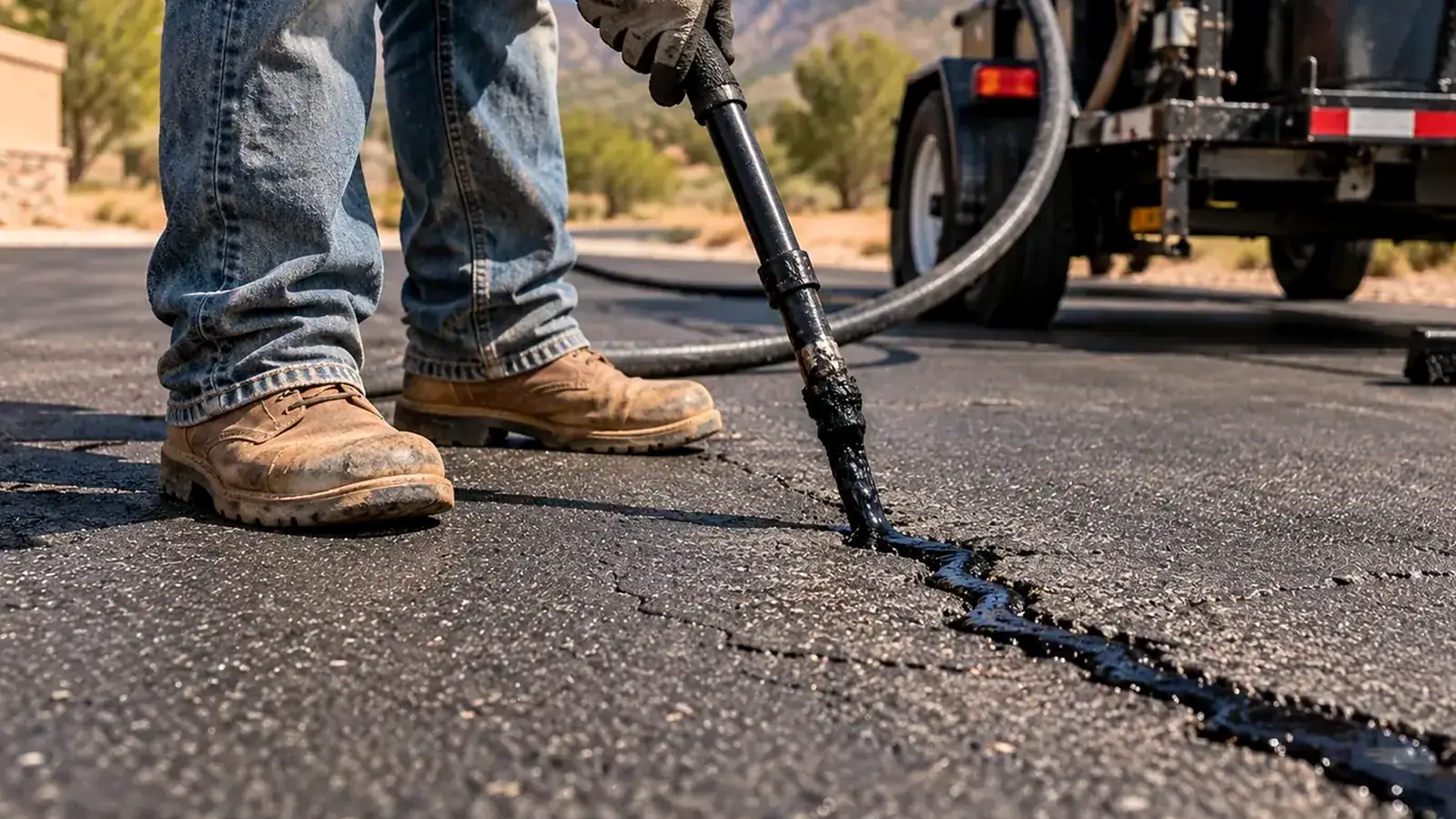
- Schedule repairs for late spring and crack sealing for early fall.
Questions we hear
Will salt damage my asphalt?
Some de-icers can be hard on asphalt and sealer. Sand or an asphalt-safe product is gentler.
How do I stop ice in the same spot?
Find where the water comes from and redirect it — usually a roof drain, slope or snow pile.
When should I fix winter damage?
Make holes safe right away; do permanent repairs in late spring.