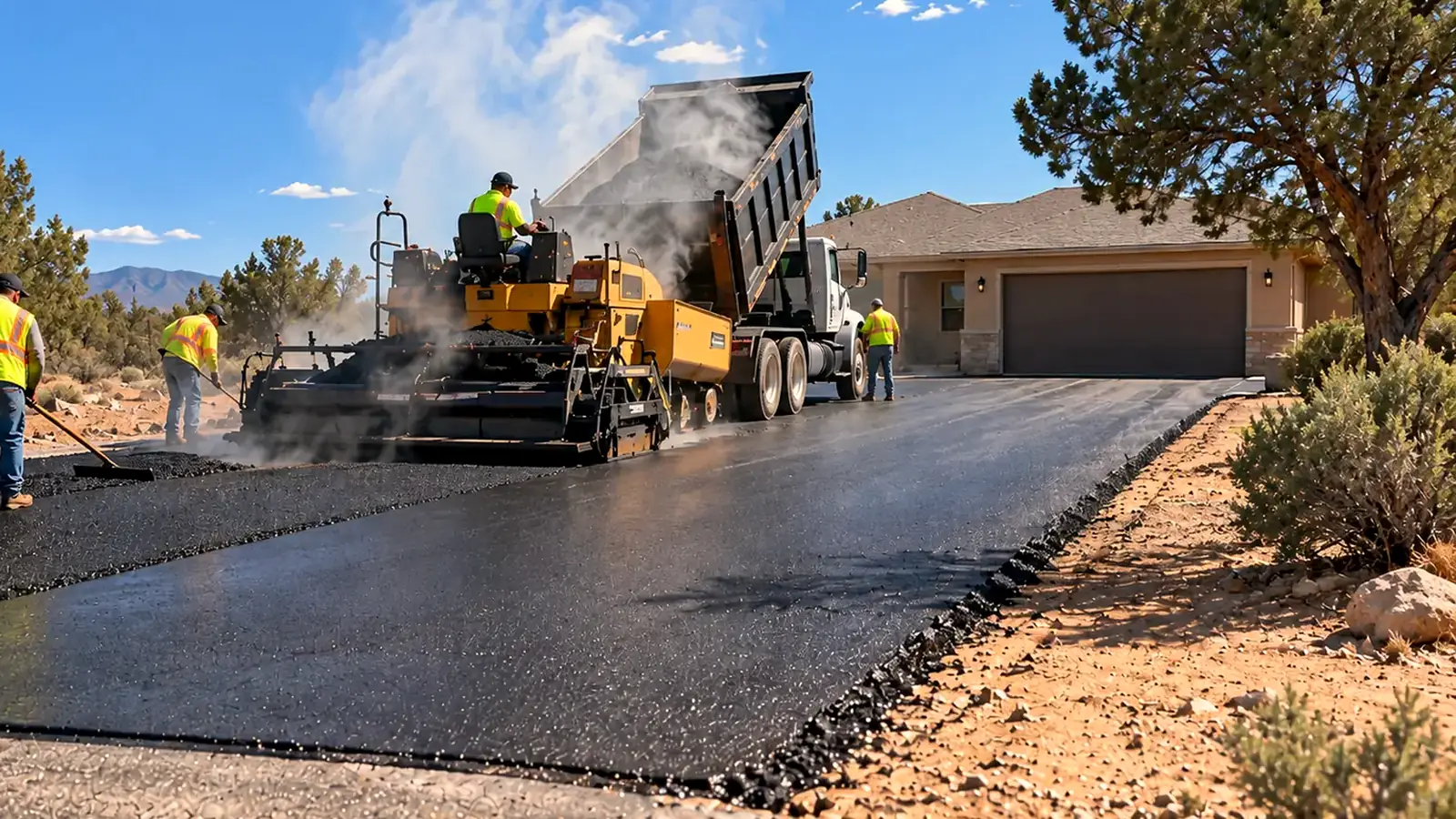
The trouble with crusher fines on a driveway
Crusher fines — the tan, compacted gravel you see all over Santa Fe — are a beautiful, natural surface. On a path or patio they're excellent. On a driveway they have a few habits:
- Spring mud. Snowmelt softens the fines; tires rut them.
- Tracking. Fine material sticks to tires and shoes and ends up on floors and rugs.
- Washouts. Summer storms carry fines downhill and leave gullies.
- Plowing. Plows and shovels scrape the surface away with the snow.
Regular gravel has the same problems in a different color.
Options
Asphalt
Firm, clean and easy to plow. Best for steep sections, parking courts and the drive you use daily. More on asphalt.
Chip seal
A sealed stone surface in tan or gray tones that keeps more of the natural look. More on chip seal.
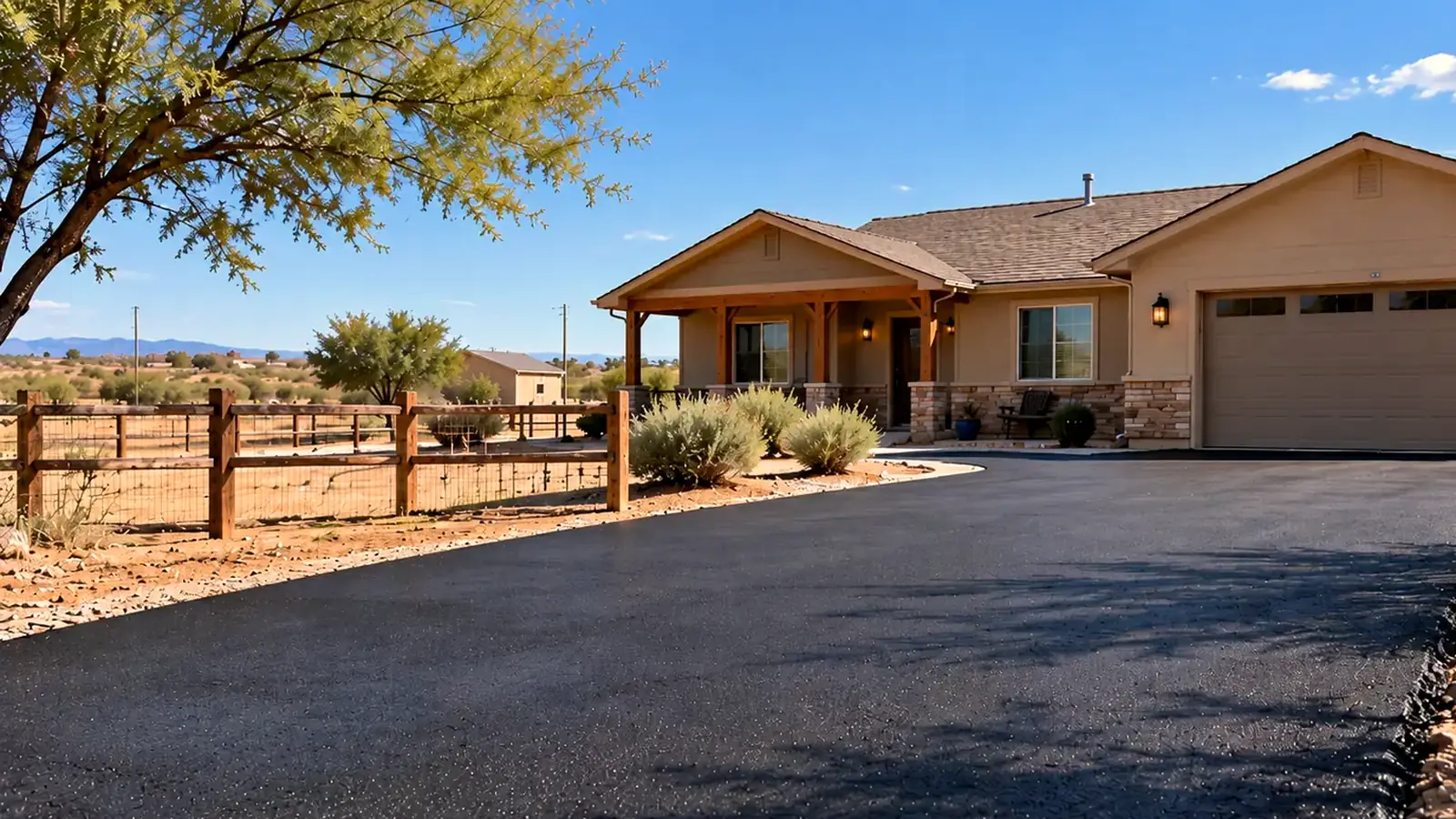
How we convert
- Check what's there. Depth of fines or gravel, base underneath, soft spots.
- Reuse what we can. Clean, well-compacted material can become part of the new base.
- Fix the drainage that caused the ruts.
- Add base and compact.
- Surface with asphalt, chip seal or a combination.
Many owners keep crusher fines for paths and courtyards and pave only the driveway — a combination that looks right and works. See crusher fines vs. chip seal vs. asphalt.
Questions we hear
Can asphalt go over my crusher fines?
Not directly. Fines alone aren't a base. We regrade, add crushed base where needed, compact, then pave.
Can I keep a natural look?
Yes — chip seal in tan stone tones, stone edging, and keeping crusher fines on paths and courtyards.
Is it cheaper to convert than start fresh?
Often, when the existing material is clean and well compacted enough to reuse as base.