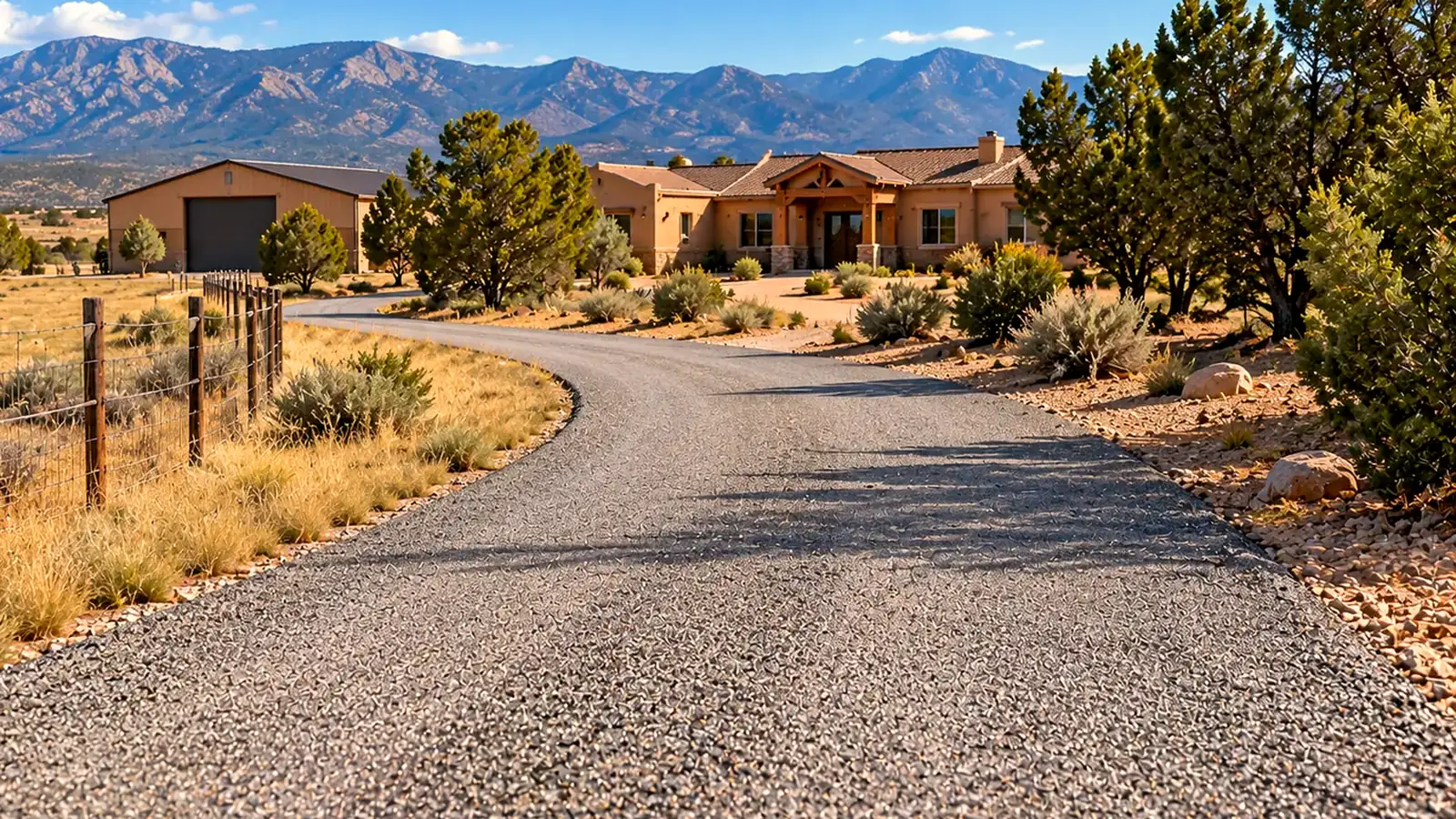
The Santa Fe-friendly paved surface
Chip seal is made by spraying hot asphalt binder over a compacted base and immediately spreading crushed stone, which is rolled in and locked in place. You end up with a surface that's sealed like pavement but looks like stone. In Santa Fe, where a lot of homeowners want their driveway to blend with adobe walls and native landscaping, that's a big part of its appeal.
Why owners pick it
- Looks natural — stone color and texture instead of black.
- Costs less per square foot than hot-mix, especially on long drives.
- Grips well in snow and on moderate grades.
- Stops mud and dust compared with crusher fines or gravel.
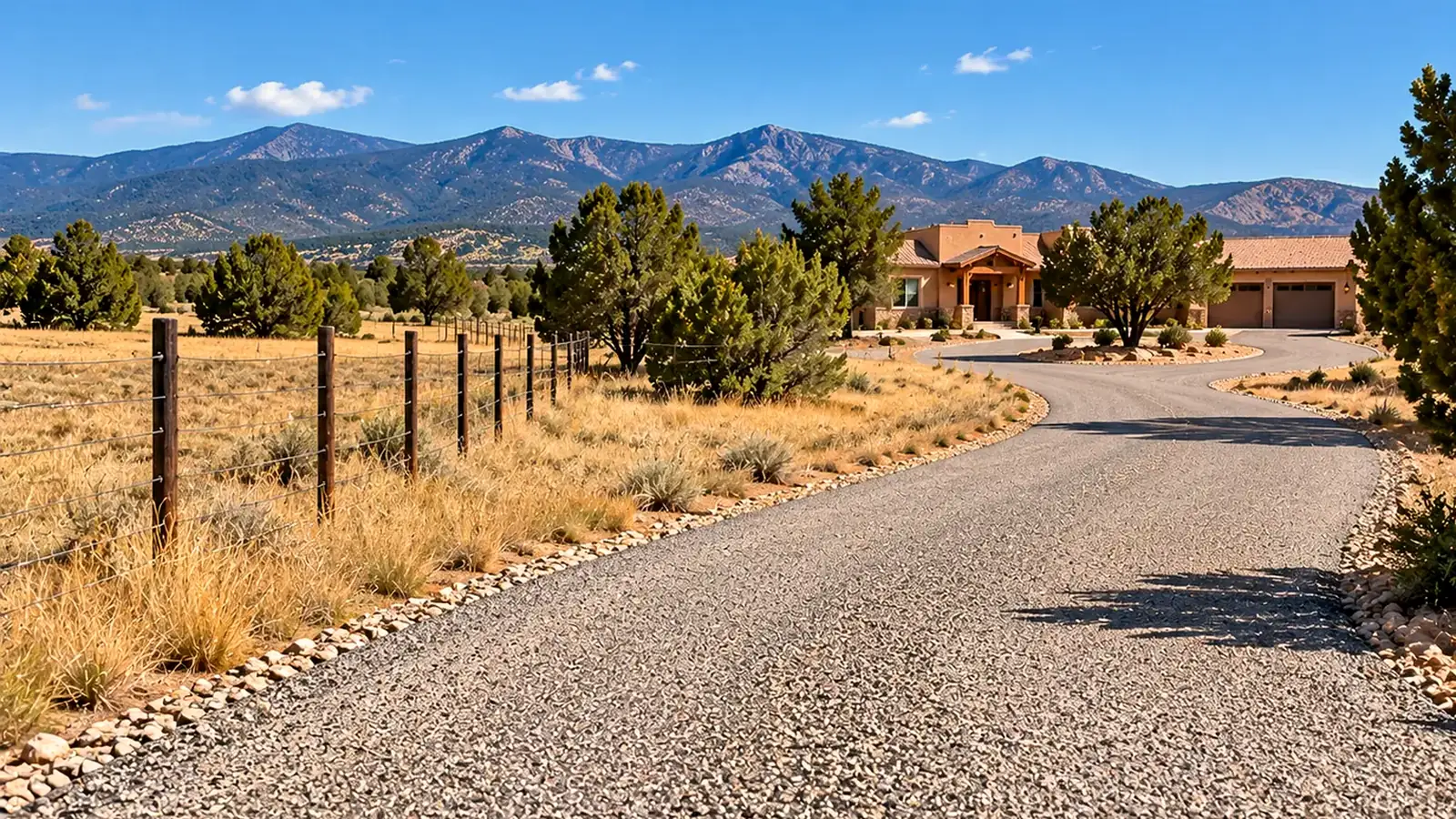
Things to know
- Some loose stone for the first few weeks — we sweep it after it cures.
- Tight turning in place can scuff stone loose, especially when it's new.
- Plows should run with shoes or a slightly raised blade.
- Plan on a renewal coat every several years.
Process
- Grade, crown and compact the base; fix drainage
- Spray hot binder at the right rate
- Spread clean crushed stone right behind it
- Roll to seat the stone
- Sweep loose stone once cured
More on chip seal in Santa Fe.
Questions we hear
Can I choose the stone color?
Stone color depends on what aggregate is available locally. We'll show you samples of what we can get.
How long does chip seal last?
A well-built double chip seal commonly lasts several years before needing a renewal coat.
Is chip seal OK in snow?
Yes — it has good traction. Use plow shoes or a raised blade to avoid scraping stone.