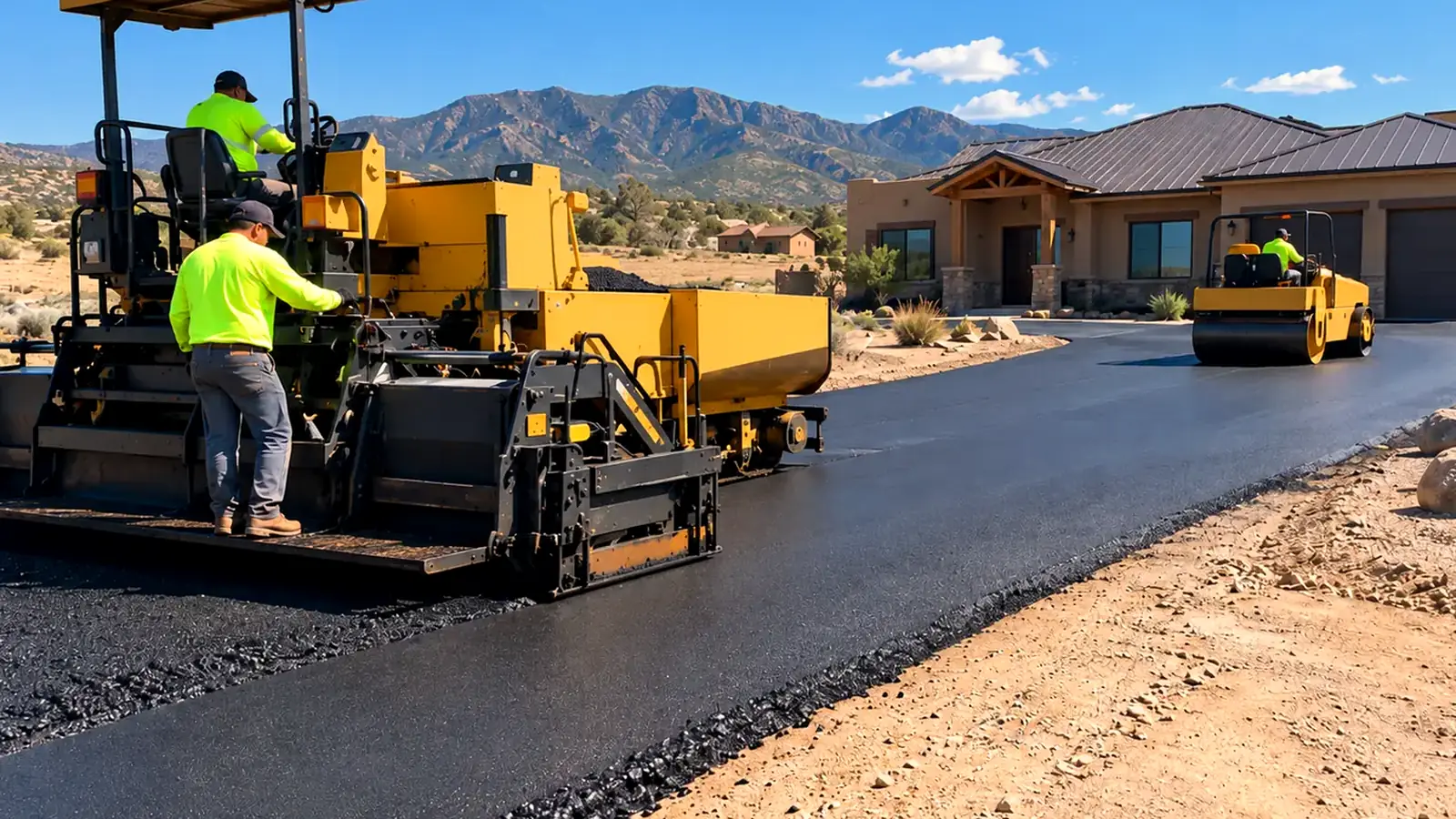
Paving at 7,000 feet
Santa Fe sits around 7,000 feet, and the foothill neighborhoods east and north of town climb higher. That means a long freeze-thaw season, snow that has to be plowed or shoveled, strong year-round sun, and July and August storms that move a lot of water fast. A driveway here has to keep water out of its base, hold its edges under a plow blade, and shrug off the sun.
How we build one
- Walk the lot. Slope, soil, where snow will pile, where water comes from and where it can go.
- Dig to firm ground. Topsoil, roots and loose fill out; soft pockets replaced.
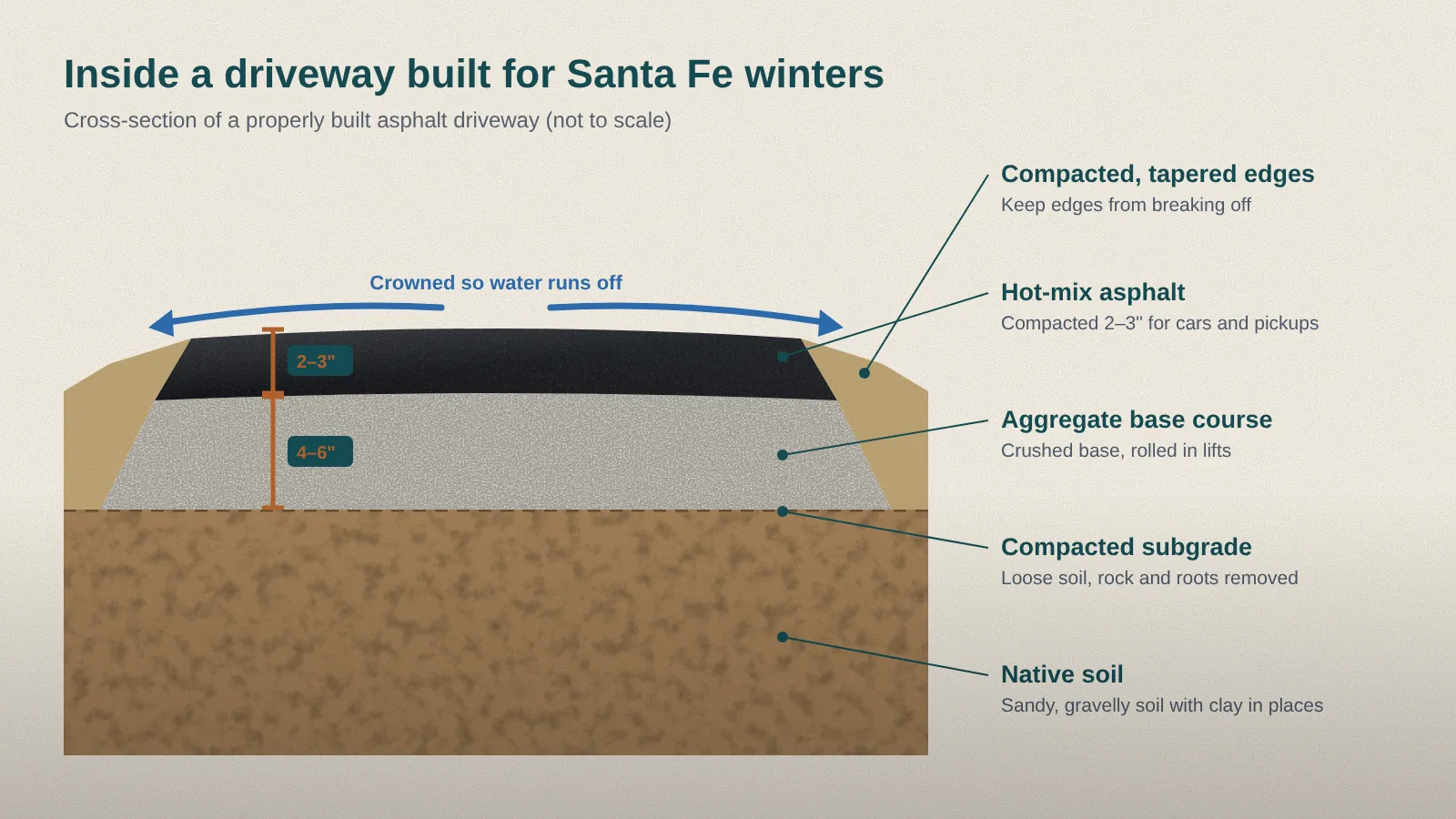
- Shape for drainage. Crown or cross-slope, plus swales or culverts where water crosses. See our drainage page.
- Compacted base. Crushed aggregate base placed and rolled in lifts — usually 4–6 inches for homes, more on soft ground or for heavy trucks.
- Hot-mix asphalt. Compacted to 2–3 inches for most homes; thicker where trucks and trailers run.
- Edges built for plows. Rolled, tapered edges with backfilled shoulders, so a plow blade doesn't peel them up.
Fitting the Santa Fe look
Many Santa Fe homeowners want a driveway that sits quietly in the landscape. A few ways we handle that:
- Keeping pavement to the parking court and the steep or high-traffic parts, with chip seal or crusher fines elsewhere
- Edging with native stone, gravel or a soft landscape transition rather than hard curbs
- Planning around coyote fences, portales, walls and existing trees
If your community has design review, see paving in design-review communities.
Season
Hot-mix needs warm ground and air, so most paving in Santa Fe happens from late spring through early fall. Book early — the window is shorter than in Albuquerque.
Call (505) 819-5086 with a rough length for a ballpark. Typical ranges are in our Santa Fe cost guide.
Questions we hear
How thick should a Santa Fe driveway be?
Most homes get 4–6 inches of compacted base and 2–3 inches of compacted asphalt — more where heavy vehicles go or the ground is soft.
Will a plow damage asphalt?
Weak edges get caught. We build tapered, compacted edges with shoulder support, and recommend plow shoes or a slightly raised blade.
How long will it last?
With a solid base, good drainage and sealcoating every few years, 20 years or more is common.
Do I need a permit?
Paving on private property usually doesn't. Work at a city street or county road — a new curb cut or apron — may need a city or county permit. We'll check.