What to expect
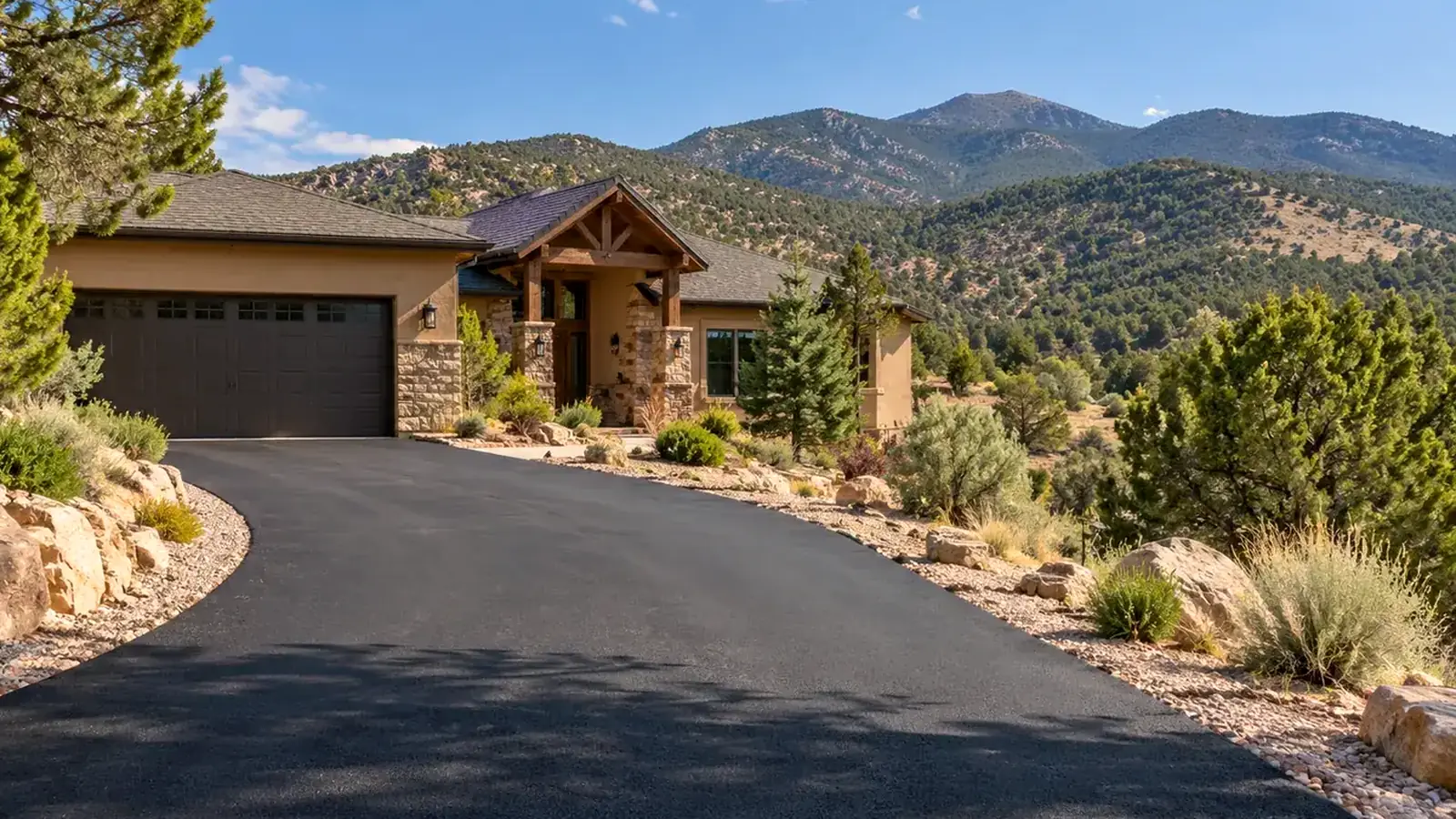
A properly built asphalt driveway in Santa Fe commonly lasts about 18–25 years, sometimes longer on gentle, well-drained lots. Thin asphalt over poor base, or drives that carry water, can fail in under ten.
What shortens asphalt life here
- Freeze-thaw: Santa Fe swings above and below freezing on many winter days. Water in cracks freezes and widens them.
- High-altitude UV: Dries and oxidizes the surface faster than at lower elevations.
- Snowplows and chains: Scrape edges and gouge the surface.
- De-icers: Can speed up surface wear on older asphalt.
- Drainage: Water along edges softens the base — see driveway drainage.
A maintenance schedule that works here
| When | What |
|---|---|
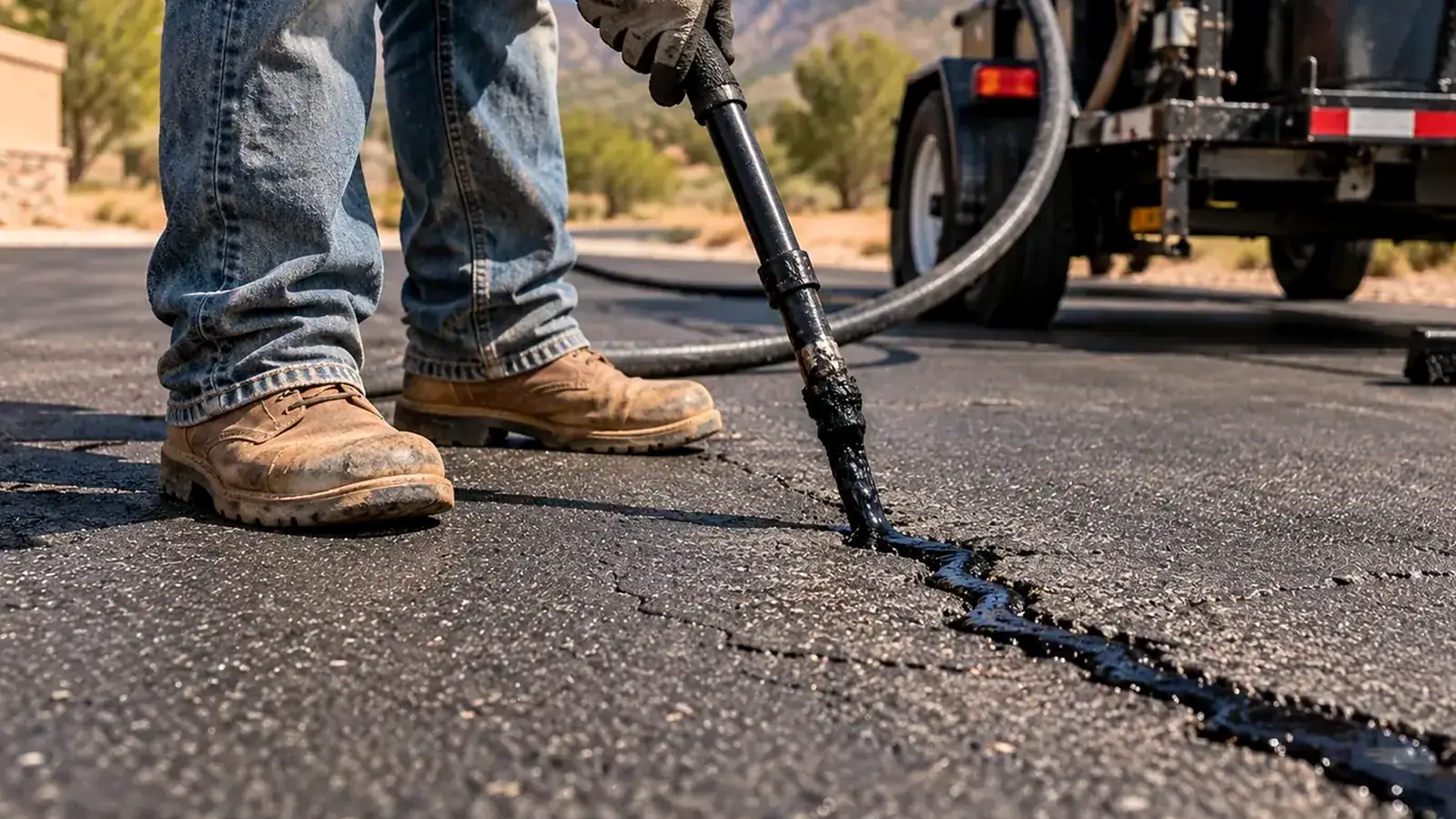
| Every fall | Seal new cracks before winter |
| Every 3–4 years | Sealcoat (first one about a year after paving) |
| Every spring | Walk the drive: check edges, drainage outlets and plow damage |
| As needed | Patch freeze-thaw potholes properly, not with cold patch only |
| Around 15–20 years | Consider an overlay if the base is still sound |
Plowing tips
- Use a plastic-edged blade or set the blade slightly high
- Mark edges with stakes before the first snow
- Avoid piling snow where it will melt across the drive
Signs it's near the end
Widespread alligator cracking, ruts and potholes that return after patching mean the base is failing. At that point an overlay won't hold and replacement is the better value. See freeze-thaw repair and overlays, or call (505) 819-5086 for an assessment.
Questions we hear
Is asphalt a good choice in Santa Fe's climate?
Yes, when it's thick enough, on a good base, and maintained. Chip seal and crusher fines are alternatives for some properties.
Does sealcoating help with freeze-thaw?
Sealcoat and crack sealing keep water out of the pavement, which is the key to limiting freeze-thaw damage.
Should I use salt on my asphalt driveway?
Use de-icers sparingly; sand or traction grit is gentler on asphalt.